Skill Development
Programs for Women
Skill Development Programs for Women: Creating Pathways to Confidence, Careers, and Economic Freedom
Economic systems across the world are shifting rapidly, and the value of practical, job-ready abilities has never been higher. In this changing environment, skill development programs for women have become one of the most effective ways to promote inclusion and long-term growth.
Women today are moving into digital services, healthcare support, education, entrepreneurship, and technology-driven roles. However, many still face barriers such as career breaks, limited training access, outdated skills, and financial dependency.
Skill-focused training initiatives bridge the gap between potential and opportunity. By aligning learning with market needs, women gain independence, confidence, and long-term economic stability.
“Skills create confidence. Confidence creates independence. Independence builds a stronger society.
Why Skill Development Matters for Women
Women empowerment through skills happens when learning leads to income opportunities and professional confidence. Skill development directly strengthens women’s participation in the economy.
- Career re-entry after employment gaps
- Job-ready, industry-relevant abilities
- Self-employment and entrepreneurship opportunities
- Improved communication and leadership skills
Types of Skill Development Programs
Digital & Technology Skills
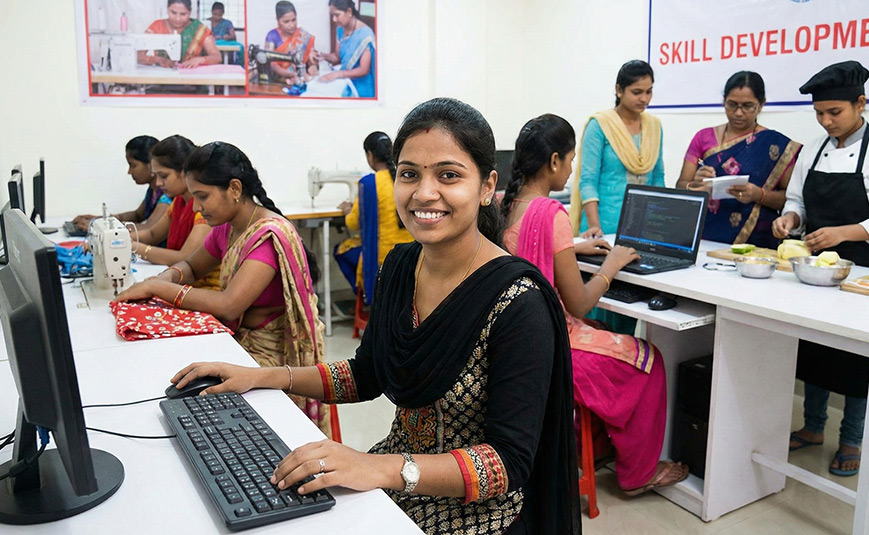
Digital programs enable women to work remotely or manage online businesses. Skills include digital marketing, content creation, data tools, website development, and AI-assisted platforms.
Vocational & Technical Training
Vocational training focuses on income-generating practical skills such as tailoring, beauty services, healthcare assistance, and technical trades aligned with local demand.
Entrepreneurship & Business Skills
Women entrepreneurship programs provide training in business planning, pricing, customer outreach, and digital payments to build sustainable enterprises.
Financial Literacy & Soft Skills
These programs strengthen money management, savings awareness, negotiation skills, and leadership confidence—ensuring long-term financial security.
Skill development does more than create jobs — it creates dignity, independence, and control over one’s future.
Government & Community Support
Government initiatives like Pradhan Mantri Kaushal Vikas Yojana, Skill India Mission, and Deen Dayal Upadhyaya Grameen Kaushalya Yojana make skill training accessible across India. NGOs and CSR-backed programs further extend reach and impact.
Final Thoughts
Skill development programs for women create pathways to confidence, careers, and economic freedom. Whether through digital learning, vocational training, or entrepreneurship, skills empower women to take control of their professional journeys.
Role of NGOs and the Private Sector
Community-based organizations play a critical role in reaching women who fall outside formal education and employment systems. NGOs work at the grassroots level to identify local needs and design practical, accessible skill development programs.
Organizations such as SEWA work directly with women workers in informal sectors, while CARE India delivers women empowerment initiatives focused on skills, education, and sustainable livelihoods.
Private-sector participation through CSR initiatives further strengthens access to training infrastructure, industry-aligned curriculum, and employment opportunities.
Outcomes of Skill Development for Women
- Improved access to income-generating work
- Greater financial independence
- More flexible career and work-from-home options
- Increased confidence and decision-making ability
- Positive impact on family well-being
- Stronger contribution to local and national economies
Choosing a Suitable Skill Development Program
Selecting the right training path plays a key role in long-term success and stability.
- Identify personal interests and strengths
- Study current job and business trends
- Check certification credibility
- Compare online and offline learning formats
- Review program cost, duration, and placement support
Effective programs balance personal capability with real market opportunity.
Real-Life Outcomes of Skill-Based Training
Women across urban and rural areas have used structured skill training to restart careers, build home-based enterprises, and secure remote employment. These success stories highlight how skills translate into confidence, stability, and sustainable livelihoods.
The Road Ahead for Women’s Skill Development
- Growth of remote and hybrid work models
- Expansion of digital, AI, healthcare, and service-based jobs
- Stronger policy and financial support for women-led ventures
- Access to global freelancing platforms
Skill development will continue to drive women’s economic participation and social empowerment.
Conclusion
Skill development programs for women create more than employment — they create independence, resilience, and long-term security. Every transformation begins with one decision: to learn a skill that opens doors.
Frequently Asked Questions
What do skill development programs for women focus on?
They focus on practical, market-relevant skills that support employment, self-employment, and long-term income stability.
Which skills currently offer strong opportunities?
Digital marketing, healthcare support, tailoring, financial literacy, and freelancing-related skills show consistent demand.
Are government-supported skill programs affordable?
Yes. Most national schemes offer training free of cost or at heavily subsidized rates.
Is it possible to learn skills from home?
Absolutely. Many programs now provide flexible online and hybrid learning options.
How do skills contribute to women’s empowerment?
Skills increase earning capacity, boost confidence, and strengthen decision-making power, leading to long-term independence.